Monday, 12 May 2014

Asphalt Roll Roofing

Asphalt roll roofing or membrane is a roofing material commonly used for buildings that feature a low sloped roof pitch in North America. The material is based on the same materials used in asphalt shingles; an organic felt or fiberglass mat, saturated with asphalt, and faced with granular stone aggregate.

Asphalt roofing solutions are engineered to provide superior protection against the elements that are known to deteriorate roofs and cause leaks.  With Henry asphalt roof coatings, you can reduce the maintenance cost of your roof and extend its overall life and performance.


Thursday, 17 April 2014

The Importance of a Cool Roof

Energy-efficient, cool roofing systems can significantly reduce roof temperatures during the summer, which does in fact improve the performance of the photovoltaic system.  Another benefit of a cool roof is that it can significantly enhance the performance of solar panels by lowering a building’s interior temperature, thus reducing the power load necessary for air conditioning during hot summer days. This has many benefits including cutting energy costs by keeping attics and ducts cooler, improving occupant comfort, cutting maintenance costs, increasing the life cycle of the roof, and reducing urban heat islands along with associated smog.


Tuesday, 15 April 2014

Sun Tunnel

What is a solar tube and how does a sun tunnel work?

Sun tube, Sun tunnel, Sky tube, Solar light tube, Light tunnel, and Solar tube, a lot of different names for same thing, made by different companies, but they all achieve the same purpose. Capture sunlight; transmit it down either a solid reflective aluminium tube or a shiny flexible vaulted plastic tube in the least number of bounces possible.

Sun Tunnel

Wednesday, 19 March 2014

Benefits of Sun Tunnels

Sun Tunnels provide a compact minimally intrusive solution to lighting needs anywhere in the home.  Closets, hallways, kitchens, bathrooms and bedrooms can all benefit from installing sun tunnels (also known as sun tubes).  Sun tunnels are composed of a dome fitted to your roof that captures light and directs it down a tube and into your home.  This Eco friendly lighting solution can be installed on pitched and flat roofs.

What are the benefits of Sun Tunnels?
  • Can be installed virtually anywhere
  • Solar tube skylights provide natural sunlight to any area of your home
  • Attached lenses at the bottom of the tube disperses light evenly
  • Much cheaper that installing a traditional skylight
  • Offers huge savings on your energy bills each and every day
  • Provide state and federal tax credits
Benefits of Sun Tunnels


Tuesday, 18 March 2014

Roof Maintenance Tips to Protect Your Home

1. Keep Excess Water Off
One of your roof's primary jobs is to keep water out of your house, but your roof needs your help to get rid of the water that falls on it. Make sure to keep your roof's gutters and downspouts in tip-top shape so that it can drain properly, and trim your trees so that they do not hang over the roof, dripping water and shedding leaves into the gutters.

2. Conquer Moss
Keeping your trees trimmed away from the roof will make the roof less friendly to moss by minimizing moss-welcoming shady areas, but moss may still grow. Use Wet & Forget to safely and gently remove any moss on your roof, and re-treat at the first sign of new growth to prevent moss from coming back.

3. Check Your Insulation
Good attic insulation helps keep your house warm in the winter and cool in the summer, and it also helps protect your roof. A good layer of insulation on the attic floor with no gap for air to get between the house and the insulation is a must. This prevents big temperature exchanges between the house and attic, which will cause damaging water condensation on the underside of the roof

4. Do a Yearly inspection
Check your roof at least once a year, preferably in the spring, for any signs of damaged or lifted shingles, moss growth, or other problems. If you don't feel comfortable checking the roof yourself, you can hire a roofing professional to do the inspection.

5. Maintain Good Ventilation

Like insulation, good attic ventilation will also protect your roof from damage caused by water condensation. Without good ventilation, water vapor can cause the roof sheathing and rafters to rot and can even damage the shingles. Make sure your attic has good, unobstructed vents with screens to keep birds out. Ventilation fans are available for larger attics.


Roof Maintenance Tips

Friday, 14 March 2014

What is Roof Flashing?

What is flashing?
Flashing is a construction detail used to seal and protects joints in a building from water penetration. The joints created by the intersection of the roof and roof mounted structures and projections, such as parapets, hatches, skylights, chimneys, vent stacks, or towers, are among the most vulnerable areas of roofing systems. They constantly expand and contract in response to changes in humidity and temperature. Greater the number of such projections, greater the potential for leaks.


Roof flashing represents a very simple and intuitive engineering technique that has been known for hundreds of years. The whole idea depends almost entirely on gravity. If the flashing has been installed correctly, gravity will work with the flashing material to shed the water onto the regular roofing materials, where it is then directed harmlessly to the ground. Roof flashing is commonly used around chimneys, fan vents, plumbing vent stacks, and other items that project out of residential roofs.


Roof Flashing

Thursday, 13 March 2014

Green Roofing Benefits

Moderation of Urban Heat Island Effect

  • Through the daily dew and evaporation cycle, plants on vertical and horizontal surfaces are able to cool cities during hot summer months and reduce the Urban Heat Island (UHI) effect. The light absorbed by vegetation would otherwise be converted into heat energy.
  • UHI is also mitigated by the covering some of the hottest surfaces in the urban environment – black rooftops.
  • Green roofs can also help reduce the distribution of dust and particulate matter throughout the city, as well as the production of smog. This can play a role in reducing greenhouse gas emissions and adapting urban areas to a future climate with warmer summers.


Tuesday, 11 March 2014

Home Repairs to Tackle

  1. Build a small home repair reference library. The crucial first step in learning to tackle home repairs confidently is to read as much as possible. Both Black & Decker and Creative Homeowner produce series of paperbacks aimed at the basics in each area of home repair: electrical work, plumbing, tiling, carpentry, and more. Reading these books before beginning work will help you know what to expect and how to execute each job skilfully.
  2. Ensure that you have the necessary tools for each job. Accumulating a solid toolbox is another essential step in making sure you can handle each home repair job as it arises. When purchasing tools, do not skimp on quality if possible. High-quality, durable tools can go a long way in compensating for novice technique.

  • At its most basic, your toolbox should contain both flat and Phillips head screwdrivers, a hammer, pliers, an adjustable wrench, a putty knife, a utility knife, a straightedge and a spirit level.
  • Power tools that are extremely helpful include an electric drill, a handheld circular saw, and an orbital sander.
  • Get the safety devices appropriate to the tools at the time you buy the tool. Goggles, face mask, ear protection and gloves are 'must have's for loud, rough or dusty jobs.
  • More specialized tools can be bought as the need arises. Drywall and plastering jobs will call for a mud box and a drywall knife, for instance, while a pipe wrench is essential for many plumbing repairs.


Sunday, 9 March 2014

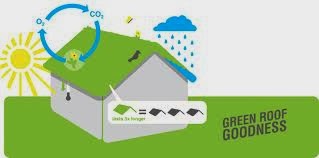
What Is A Green Roof?

A green roof or living roof is a roof of a building that is partially or completely covered with vegetation and a growing medium, planted over a waterproofing membrane. It may also include additional layers such as a root barrier and drainage and irrigation systems. Container gardens on roofs, where plants are maintained in pots, are not generally considered to be true green roofs, although this is debated. Rooftop ponds are another form of green roofs which are used to treat grey water.

Green roofs serve several purposes for a building, such as absorbing rainwater, providing insulation, creating a habitat for wildlife, increasing generosity and decreasing stress of the people around the roof by providing a more aesthetically pleasing landscape, and helping to lower urban air temperatures and mitigate the heat island effect. There are two types of green roofs: intensive roofs, which are thicker, with a minimum depth of 12.8 cm, and can support a wider variety of plants but are heavier and require more maintenance, and extensive roofs, which are shallow, ranging in depth from 2 cm to 12.7 cm, lighter than intensive green roofs, and require minimal maintenance.


Friday, 7 March 2014

ROOF-REPAIR SAFETY TIPS

Working on a roof can be dangerous. Keep these safety precautions in mind before tackling a roof repair:

  • Roof repairs should be done on a sunny day when the roof is completely dry. A wet roof is slippery and very dangerous.
  • Adequate safety measures must be taken for any roof repairs. Always use safety ropes.
  • On steep roofs, use a ladder framework to provide secure anchoring.
  • Rubber-soled shoes provide the best traction when working on a roof.
  • The location of power lines should be kept in mind when working on a roof.­


Sunday, 2 March 2014

Get Ready for Spring!!

Outdoor Maintenance
·         Clean gutters and downspouts and make sure they are directing water away from the house.
·         Cut back tree limbs and shrubs growing within five feet of the house or that are brushing up against the roof. You will create better ventilation, help dry out surfaces and prevent possible damage.
·         Check for and repair cracks in driveway/sidewalk. Spring is the best time to seal cracks in the driveway or any other concrete.
·         Pressure wash your deck/patio and bring outdoor furniture out of storage.  Make sure to wipe down each piece thoroughly prior to placing on a freshly-washed surface.
·         Check garden hoses for dry rot and inspect hose faucets for possible freeze damage that may have occurred during the winter months.
·         Clean/condition your outdoor grill by first rinsing all outside surfaces with water.  If grease has loosened on the grill grates and inside of the grill, wipe off using grill cleaner and paper towels. Follow by washing with a mild detergent and water. Rinse well and wipe dry.

·         Check for possible damage to the roof.  Look for missing, cracked or broken shingles and make note of any needed repairs.

Get Ready for Spring

Thursday, 27 February 2014

Be Alert to Early Signs of a Roof Leak

A yearly roof checkup is great, but problems can occur at any time. Early signs of trouble include:
  • Dark areas on ceilings.
  • Peeling paint on the underside of roof overhangs.
  • Damp spots alongside fireplaces.
  • Water stains on pipes venting the water heater or furnace.


5 Ways to Protect Your Home from Water Damage during Hurricane Season!

SEAL GAPS
  • Aging and weather can lead to gaps around the penetrations entering your home and around windows and doors.
  • Over time, gaps can form in areas such as where water faucet pipes, gas pipes and air conditioning pipes enter the walls. Gaps also may exist behind electrical outlets, junction boxes, circuit breaker boxes and electric and water meters. Cracks or voids under window sills also can be created due to weather and aging. Water can enter through these openings and cause significant damage that you may not notice until it is too late and major repairs are needed.


REDIRECT POOLING WATER
Pooling water near a house can lead to significant interior damage. Consider these improvements to keep water away from your home:
  • Look at the grading of your property. The grading should direct water away from the house to avoid pooling water.
  • Evaluate the drainage of the property and consider adding a waterproof membrane to the wall where leaks have occurred.
  • Add ground or French drains to help move water away from the house.
  • If there are penetrations of a house within 6 inches of the ground, caulk around the penetrations and use sandbags when storms threaten to create a barrier around the penetration


PROTECT VENTS AND SOFFITS
Attics are vented (cooled) in three ways and each can be major paths to let water into your home. Click on the resources below to see how to protect your home from wind-blown rain through these locations.
  • Vents on the roof
  • Gable end vents
  • Vents under eaves or overhangs 


Wednesday, 26 February 2014

What Is Roof Sealant?

Roof sealant is a product which can be applied to roofs to seal them against the weather. This product is commonly used on flat roofs, because standing water on the roof can eventually lead to leaks during the winter. Roof sealants for sloped roofs are also available, along with specialty products which are designed to go with roofing products such as shingles. Using a roof sealant can extend the life of a roof and confer other benefits.
In some cases, it may be necessary to hire a roofing contractor to apply roof sealant. Some products are only available to contractors, and others require special skills which the average property owner may not have. In others, it is possible to apply a roof sealer independently, or with some help from friends, with many products coming in the form of liquids which can be applied with paint rollers.

On a roof which is designed to be used with a sealant product, periodic reapplications of roof sealant will protect the roof. The sealant can prevent leaks in addition to minimizing damage caused by UV exposure. Being in the hot sun can cause a roof to bleach, crack, or develop other problems which may manifest during the rainy months. Roof sealants can also improve efficiency; just applying a white coating to a roof can cut down on heating costs substantially, in addition to making the surrounding environment cool. In urban areas, people are sometimes encouraged to use white or light roofing materials to bring temperatures down.

Sunday, 23 February 2014

Get Your Home Ready for Spring

CHECKLIST:
  • Flip or rotate your mattress. Check the warranty card for the manufacturer's instructions and recommendations.
  • Air out throw rugs on a clothesline to freshen. Steam clean or shampoo wall-to-wall carpeting.
  • Wash pillows and curtains to help reduce allergens and dust mites.
  • Change smoke and carbon monoxide detector batteries.
  • Organize and thoroughly clean out kitchen cupboards and the fridge, discarding canned goods and other items that are past their expiration dates.
  • Organize the basement and inspect for mold. Open doors and windows to thoroughly ventilate the area
Get Your Home Ready for Spring


Thursday, 20 February 2014

How to deal with piled-up snow?

  • Check on your channels.  It’s slippery on your roof right now, so trying to get up there and sweep off snow or warm up the ice is a bad idea.
  • Remove as much ice and snow as you can from window wells.
  • Remove any outdoor flower or window boxes. The snow piled in these can melt and cause moisture interruption.
  • Help your neighbours by removing any leaves and debris from pipes.  This simple action will help prevent flooding on your street.
  • Move any snow that has piled up against your home.
Roof Cleaning


Monday, 17 February 2014

Early Signs of a Roof Leak

  • A yearly roof check-up is great, but problems can occur at any time. Early signs of trouble include:
  • Dark areas on ceilings.
  • Peeling paint on the underside of roof overhangs.
  • Damp spots alongside fireplaces.
  • Water stains on pipes venting the water heater or furnace.


Sunday, 16 February 2014

Reasons You Need a New Roof

Needing a new roof can be tough, but there are times when a simple repair won’t do the trick.  Here are five reasons a home may need a new roof:
1. Sagging sections in your roof.  When one part of your roof dips below the rest of the roof, it indicated there may be rot, water damage, or some other structural issue which requires a replacement.
2. Dry rot.  When dry rot is affecting your roof, any timber affected by the dry rot has to be removed and replaced.
3. Leaky roof.  Sometimes a leak can be repaired simply, but there are times the leaks indicating that there are larger problems with your roof.
4. Excessive damage.  Major damage from a fallen limb or a fallen tree can be done to your roof which may mean it needs to be completely redone.
All in all, your roof is an important part of the overall health of your home.  Be sure to care for it and get it replaced when needed.

Tuesday, 11 February 2014

Features of Heat Reflective Roof Paint

  • By keeping the building cool, it cuts the cost of air conditioning upto 40%
  • Blocks ultraviolet rays up to 85% and solar infrared rays up to 90%
  • Protects the roof from fungus and moulds formation
  • Eliminates the formation of cracks
Solar Reflective Coating


Monday, 10 February 2014

Facts about Green Roofing

  • The simple act of using a lighter-colored roofing material can make your roof greener.
  • Installing a living roof is a very heavy activity.  You have to be sure your whole home can support the extra weight of soil, plants, and water.
  • The usual warranty period for alternative green roofing (like tile or metal) is often a lot longer than just an asphalt roof.
  • While a living roof or tile roof is very heavy, a metal roof is actually much lighter than those options.
  • If a whole roof change is too much for you, another green option is a tubular skylight.  This offers additional lighting in your home and might get you a tax credit.
  • Green roofing is an important and effective option in helping improve the environment.  Here’s hoping we can all do our part in helping the environment this year.


green roof